

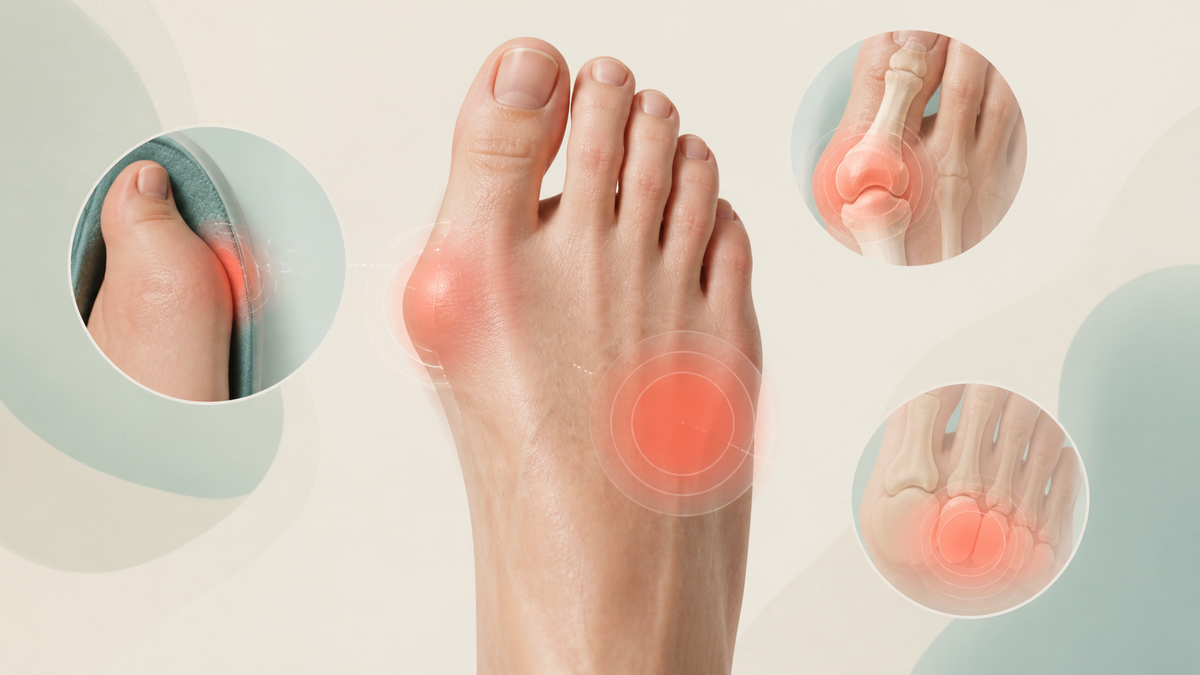
A bunion can hurt because shoes press or rub over the prominence, the tissues around the first MTP joint become irritated, or altered foot mechanics increase load beneath the forefoot. Stiffness, arthritis, calluses and crowding of neighboring toes can add discomfort. Not every painful big-toe joint is a bunion, especially when symptoms begin suddenly.
Why do shoes change the pain?
A narrow toe box or stiff seam can concentrate pressure over the widest part of the forefoot. Pain that appears in one shoe but not another often reflects fit and friction rather than a sudden change in bone alignment.
Use the bunion footwear checklist.
Can the joint itself hurt?
Yes. The MTP joint bends during push-off. Changed alignment may alter forces through the joint and ball of the foot. Inflammation, stiffness or coexisting arthritis can make this movement uncomfortable.
What can reduce irritation?
Start by removing avoidable pressure: choose adequate width and depth, check seams, and consider a soft pad if it fits without making the shoe tighter. Activity changes may help during a flare.
See practical ways to reduce pressure and friction.
When might it be something else?
Gout often causes a rapid episode of severe pain, heat, redness and swelling. Injury, infection and arthritis can also affect the area. New intense symptoms, fever, broken skin, numbness or inability to bear weight warrant prompt assessment.
Read bunion versus gout.
Four common pain patterns
- Surface pressure: tenderness directly over the prominence after shoe wear.
- Joint pain: deeper discomfort or stiffness when the big toe bends during push-off.
- Toe crowding: rubbing, corns or calluses between the first and second toes.
- Transfer discomfort: pain or callus beneath the forefoot when load shifts away from the first ray.
These patterns can overlap. Identifying the pattern helps avoid buying a spacer for a shoe-seam problem or adding a thick pad inside a shoe that is already too narrow.
Why inflammation is not the same as infection
Repeated pressure can leave the skin and tissues over a bunion red or tender. Infection is a different concern, especially with broken skin, spreading redness, drainage, fever or rapidly worsening pain. Gout can also cause intense warmth and swelling. When the pattern is new or severe, assessment is safer than assuming ordinary irritation.
A short trigger audit
Compare symptoms barefoot and in different shoes; note whether pain appears during push-off or only after prolonged wear; inspect for a seam over the prominence; and check for callus beneath the second metatarsal or between the toes. This does not diagnose the cause, but it gives a clinician or shoe fitter more useful information.
What pain relief does not prove
If a wider shoe or pad reduces pain, that supports pressure as an important trigger. It does not show that the underlying alignment has been corrected. Symptom relief is still valuable, but the mechanism should be described accurately.
Key takeaways
Bunion discomfort can come from skin pressure, soft-tissue irritation, joint loading or related toe changes. Identify the trigger instead of assuming every episode has the same cause.


